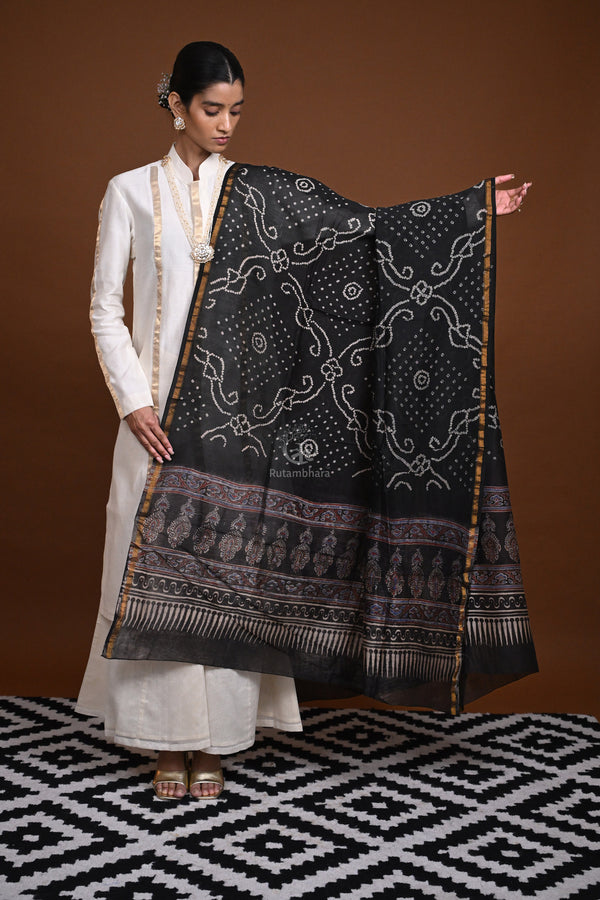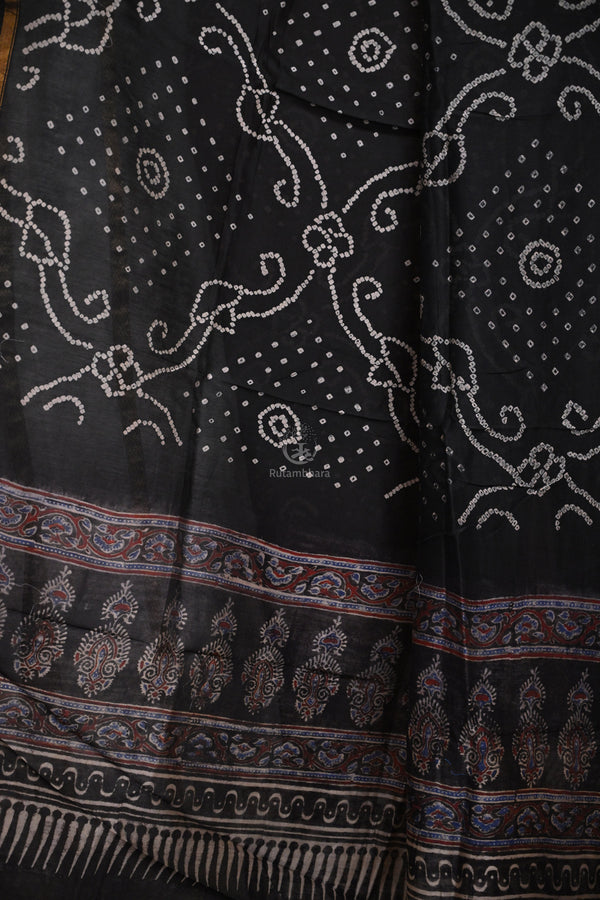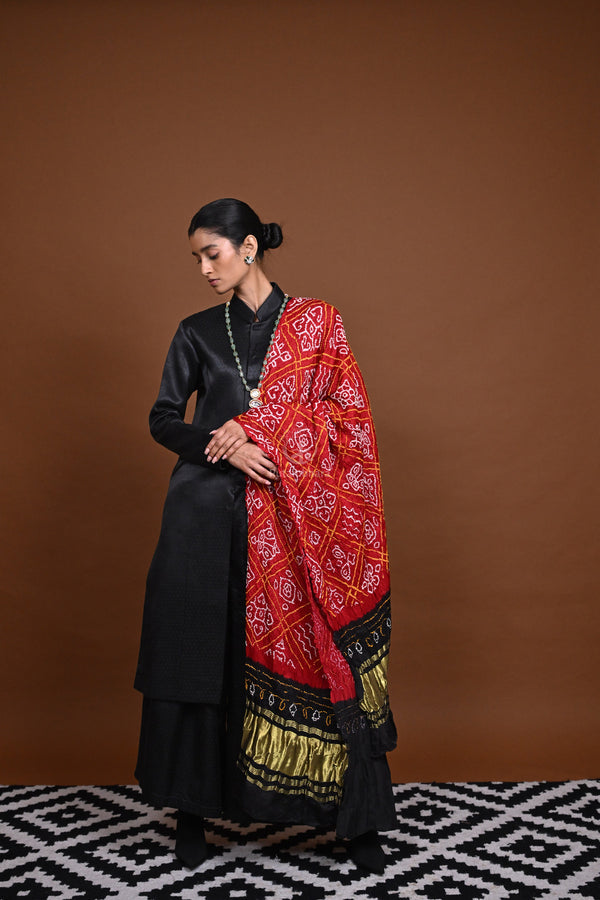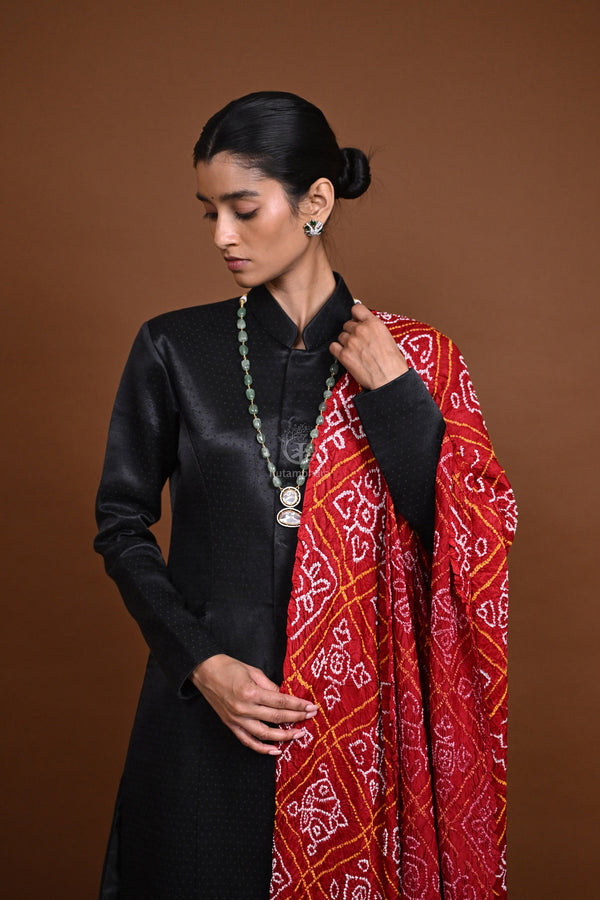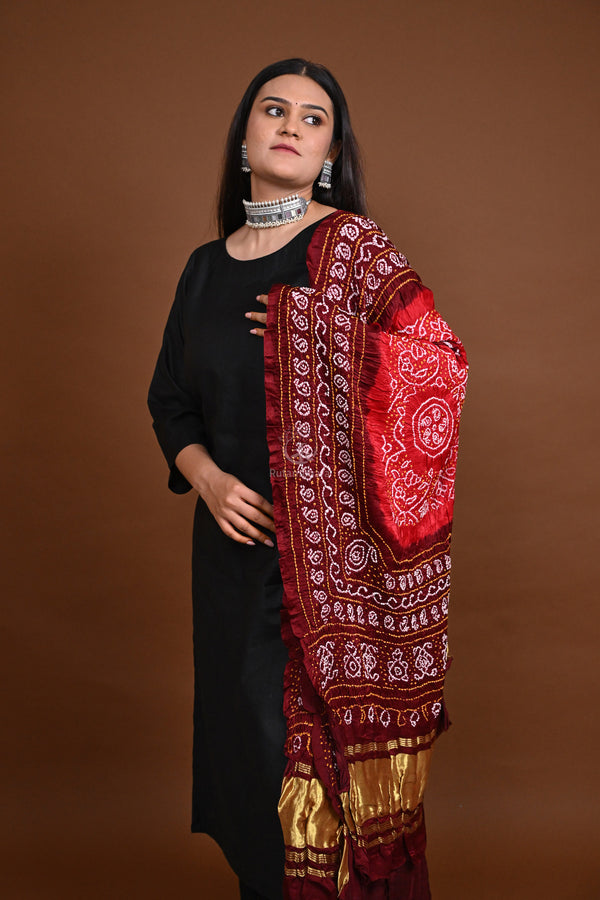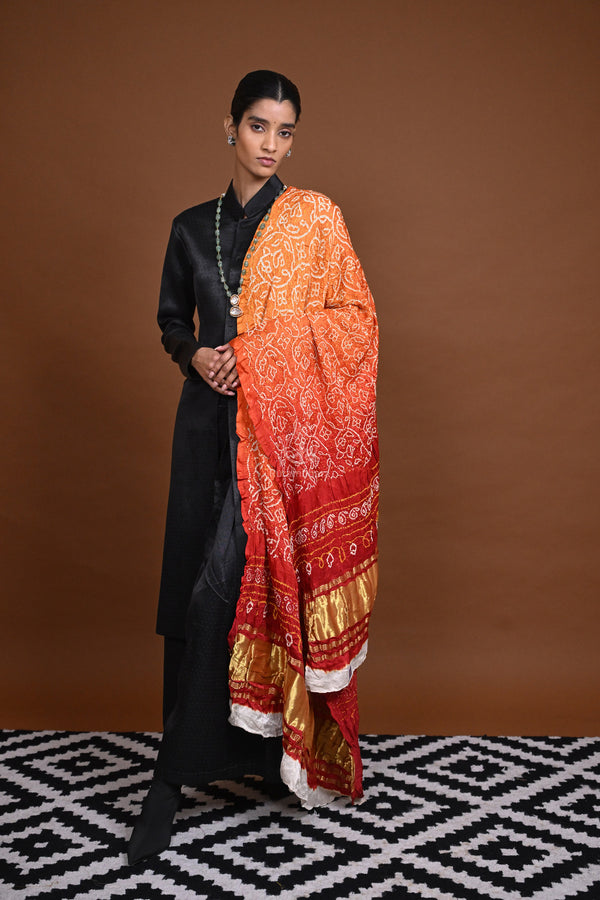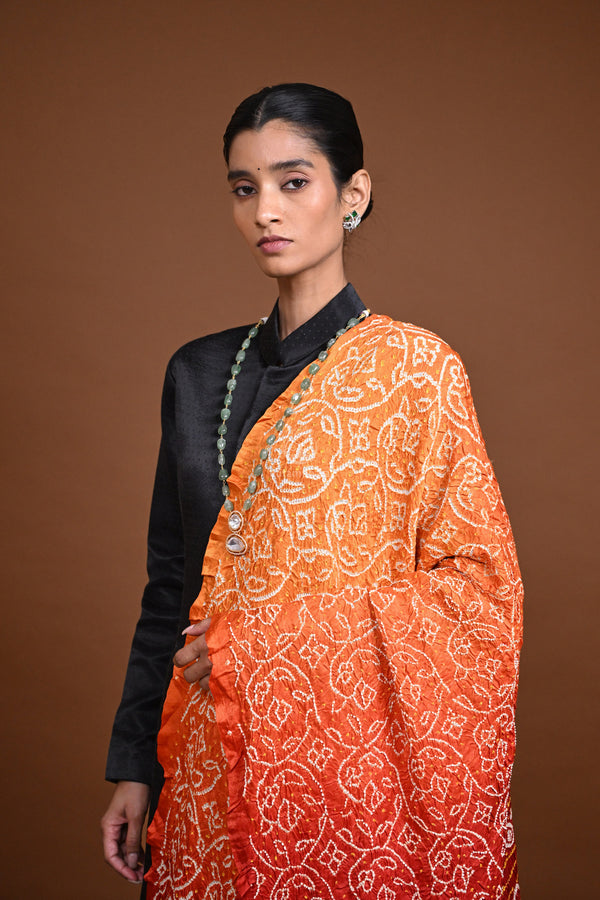


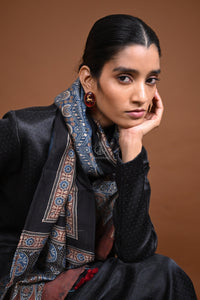
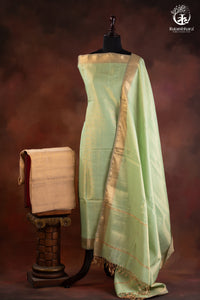
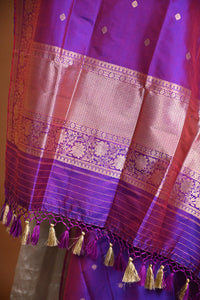
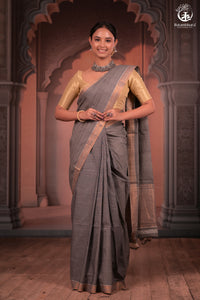
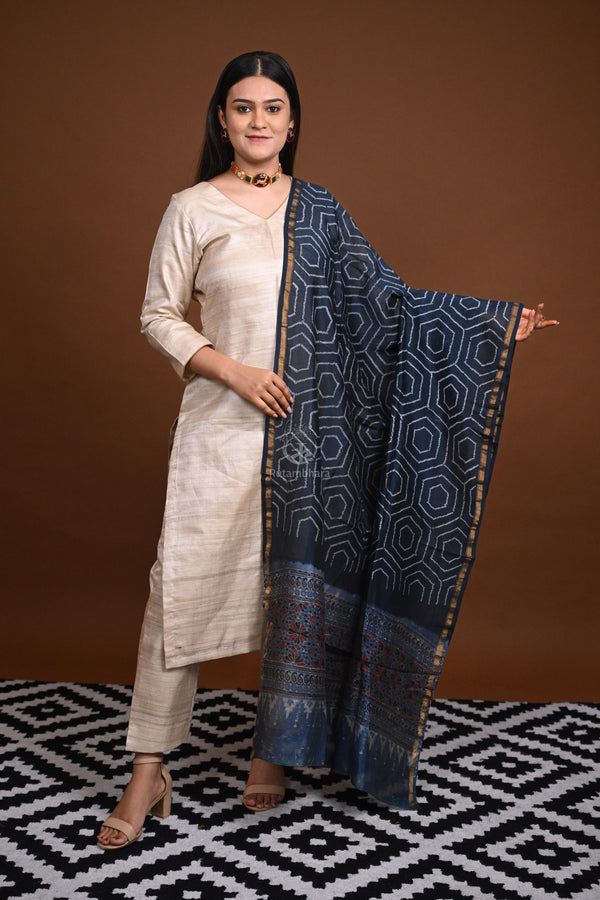
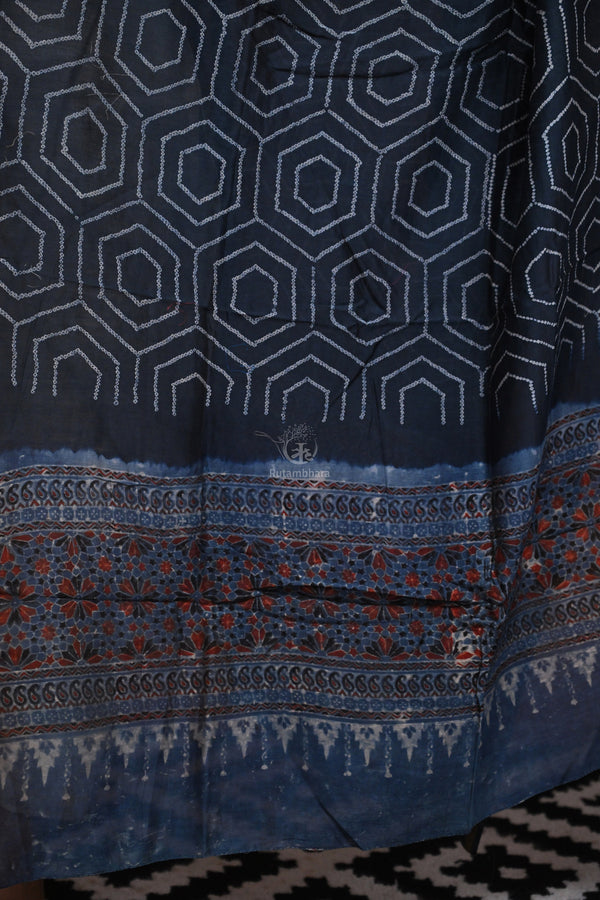
Bandhani and Rai Bandhej dupattas, tie-dyed by hand on gajji silk and Chanderi.
6 products (filtered)
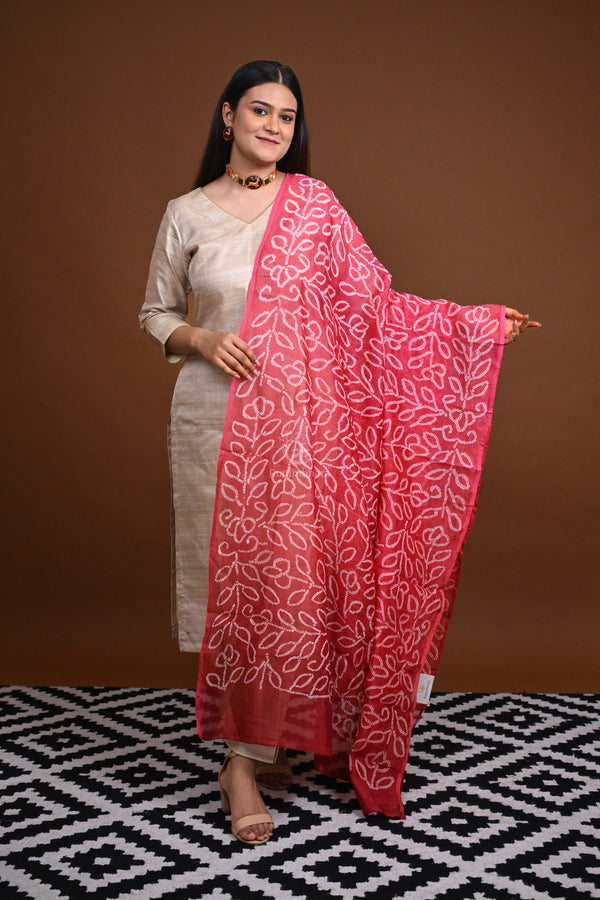
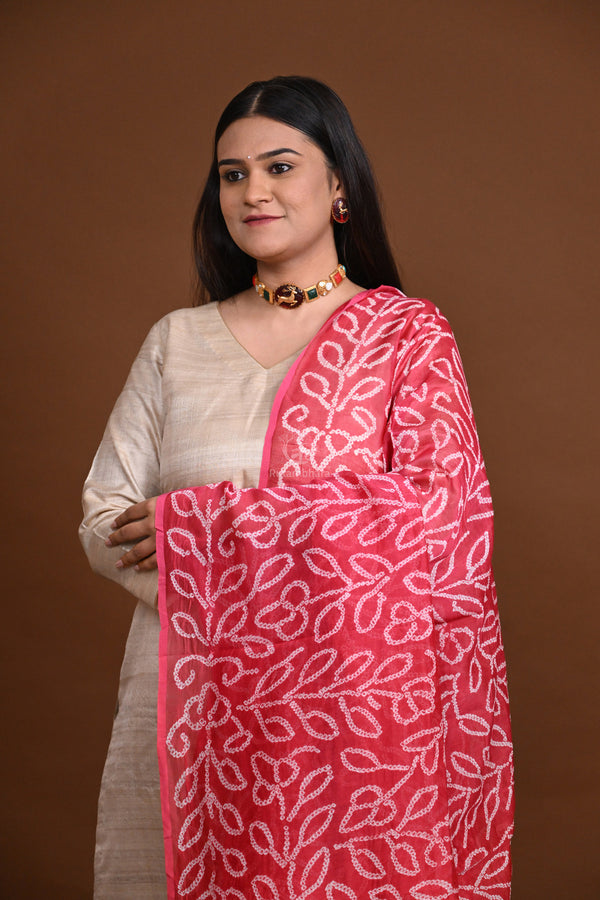
Bandhani is made by pinching tiny points of cloth, tying each with thread, and dyeing the piece. Each tie leaves a small undyed dot, and thousands of them together build the pattern. Rai Bandhej is the finest version, with dots as small as mustard seeds.
This edit has two strands. The gajji silk Bandhani dupattas are occasion pieces in red, maroon and black, in traditional lagdi patta and shikari designs. The Chanderi Rai Bandhej pieces are lighter, in silk-cotton, including ombre dyes and pieces combined with Ajrakh printing.
Because these are woven by hand, slight irregularities in the weave and small colour shifts between pieces are normal. They are the signature of a handloom, not a flaw.
They are the same craft. Bandhani and Bandhej both name the tie-dye technique from Gujarat and Rajasthan; Rai Bandhej is its finest, smallest-dot form.
A dense, lustrous silk traditionally used for Bandhani in Gujarat. It holds bright colour well and drapes with some weight.
Yes. Red and maroon gajji silk Bandhani is a traditional choice for weddings and festivals.
Dry clean only. Store folded in cotton or muslin away from direct light, and refold along a different line occasionally so the zari does not crease in one place.
Loading product...