

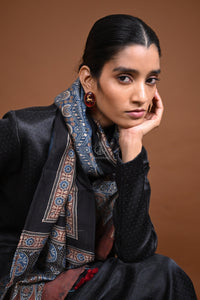
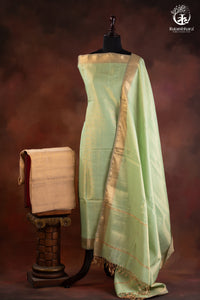
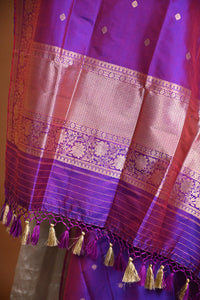
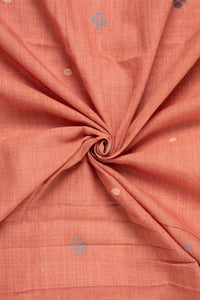
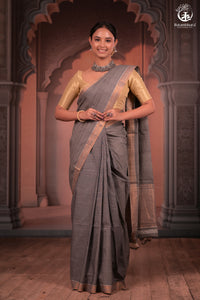


Vegetable Printed Natural Dye Silk Dupatta
Rs. 6,990.00
Handcrafted silk dupattas — Banarasi brocade, pen Kalamkari on tussar and Bandhani on gajji silk, made for festivals and the wedding season.
21 products (filtered)
Showing 16 of 21 products
Our silk dupattas are the occasion end of the range. Three traditions make up most of the edit. Banarasi is handwoven with gold zari, either as an all-over floral jaal or as a border with small buttas. Pen Kalamkari on tussar silk is painted by hand, line by line. Bandhani on gajji silk is tie-dyed into fine dotted patterns. Alongside these are Ajrakh block printed on tussar and a natural-dye vegetable print.
Silk is the natural choice from October onwards. It holds warmth better than cotton, takes deep colour, and drapes over a jacket or a shawl without bunching, so a silk dupatta carries a plain suit to a winter wedding with no other help.
Because these are woven by hand, slight irregularities in the weave and small colour shifts between pieces are normal. They are the signature of a handloom, not a flaw.
A Banarasi with gold zari is the traditional choice. For something lighter but just as festive, Bandhani on gajji silk or a hand-painted Kalamkari on tussar works well.
Yes, as a layer. Silk holds warmth better than cotton and drapes well over a jacket, a Nehru coat or a shawl, which is how a silk or Banarasi dupatta is usually worn to winter weddings. It is not a substitute for a woollen shawl in real cold.
A wild silk with a natural gold tone and a slightly textured surface. It takes hand painting, such as Kalamkari, beautifully.
Dry clean only. Store folded in cotton or muslin away from direct light, and refold along a different line occasionally so the zari does not crease in one place.
Loading product...


