


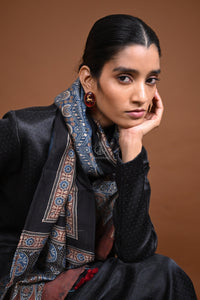
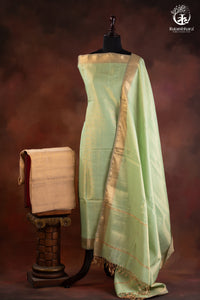
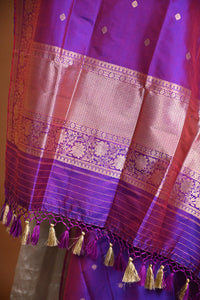
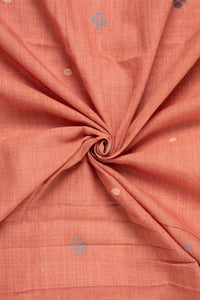
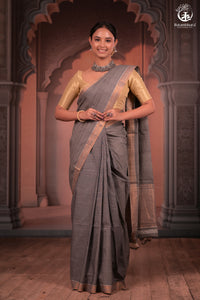


Handcrafted dupattas in silk, silk-cotton and cotton — Banarasi, Ajrakh, Kalamkari, Bandhani, Ikat and Jamdani, made by artisan clusters across India.
44 products (filtered)


Showing 16 of 44 products
Every dupatta here is handcrafted. Some are handwoven, with the pattern carried in the weave: Banarasi brocade with gold zari, Jamdani with its floated motifs, Ikat and Sambalpuri where the yarn is tie-dyed before it reaches the loom. Others start as handwoven cloth and are decorated by hand afterwards: Ajrakh block printing in natural dyes, pen Kalamkari painted line by line, and Bandhani and Rai Bandhej tie-dye.
The range runs from everyday to occasion. Cotton and silk-cotton dupattas, including the Ajrakh pieces on Mangalgiri and Chanderi and the Ikat and Jamdani weaves, are light enough to wear daily and are the easy way to lift a plain kurta. Silk dupattas, including Banarasi, Kalamkari on tussar and Bandhani on gajji silk, are the ones to keep for festivals and the wedding season.
A dupatta is usually the piece that decides the outfit. Pair a printed or heavily worked dupatta with a solid suit; with a busy suit, choose a quieter dupatta in one of its colours. Contrast works too: red with green, black with maroon, and indigo with rust are classic pairings. In the cooler months a silk dupatta layers well over a jacket or a shawl, which is how most people wear them to winter weddings.
Most of our dupattas measure around 2.3 to 2.5 metres in length, enough to drape over one or both shoulders. The exact size, fabric, technique and care are listed on every product page. If you would rather browse by tradition or by cloth, use the craft and fabric edits below.
Because these are woven by hand, slight irregularities in the weave and small colour shifts between pieces are normal. They are the signature of a handloom, not a flaw.
A dupatta is longer and wider, usually around 2.3 to 2.5 metres long, and is traditionally worn with a suit or kurta set. A stole is narrower and lighter, and works as a layer over Indian or Western clothing.
Choose silk. A handwoven Banarasi with gold zari is the classic occasion dupatta; Bandhani on gajji silk and hand-painted Kalamkari on tussar silk are lighter alternatives with just as much presence.
Cotton and silk-cotton pieces such as Ajrakh, Ikat, Sambalpuri and Jamdani. They are light, breathable and comfortable for a full day.
Yes, as a layer. Silk holds warmth better than cotton and drapes well over a jacket, a Nehru coat or a shawl, which is how a silk or Banarasi dupatta is usually worn to winter weddings. It is not a substitute for a woollen shawl in real cold.
Yes. Each one is handwoven, or hand block printed, hand painted or tie-dyed on woven cloth. The technique is named on every product page.
Silk, Banarasi, Kalamkari and Bandhani pieces should be dry cleaned. Cotton and most silk-cotton can be hand washed gently in cold water, separately, and dried in shade. The care line on each product page is the one to follow.
Loading product...


