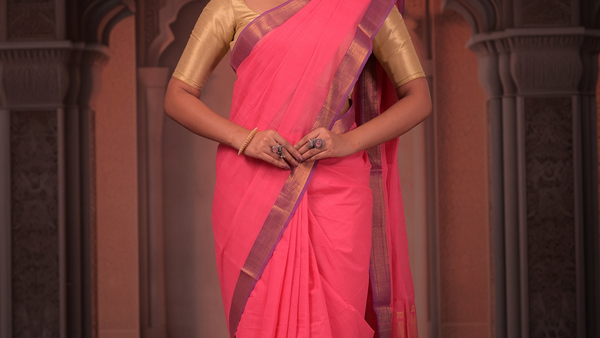

Snehal blends a degree in textile design with 10+ years in global finance. She founded Rutambhara to celebrate India’s handloom heritage and works directly with weaving and printing clusters across India on fair-trade sourcing.
Quick facts
- Ganesh Chaturthi runs ten days, ending on Anant Chaturdashi — it falls in mid-September this year.
- The festival sits in the tail of the monsoon. Heat and humidity should decide your fabric before colour does.
- Traditional palette: haldi yellow, sindoor red, marigold orange, leaf green, and undyed cream.
- You need roughly three registers: everyday (aarti at home), visiting (pandal hopping), and the two big days.
Plan the ten days, not the outfit
The mistake most of us make is buying one expensive festive piece and then improvising the other nine days out of whatever is clean. Ganesh Chaturthi is not a one-evening event. There is the sthapana on day one, ordinary weekday mornings with an aarti squeezed in before work, weekend visiting, and then visarjan — which involves crowds, a procession and, quite often, rain.
So think in three registers rather than one outfit. Most people need four or five daytime pieces they can wear in humidity, one properly festive piece for the first day, and one heirloom-grade piece for the last.
Register one: the everyday nine days
What matters here is that the fabric survives September in western India. That rules out most heavy synthetics and anything with dense zari that will not breathe.
Handloom cotton
The workhorse. Breathes, absorbs, washes at home, and looks better after a few wears rather than worse. A cotton saree in mustard, rust or off-white with a contrast border reads as festive without any effort.
Maheshwari
Madhya Pradesh's silk-cotton weave, with its distinctive reversible border and fine striped or checked pallu. Light enough for a humid morning but with enough sheen to read as occasion wear. If you only add one fabric to your festive wardrobe this year, make it this.
Chanderi
Almost transparent, slightly crisp, scattered with small zari or thread buttis. Chanderi is the most obliging festive fabric there is — dressy enough for an aarti, light enough to wear to work afterwards.
Silk cotton
The compromise fabric, and the best-stocked category we have. Silk's drape and lustre with cotton's breathability, which is exactly what a monsoon festival asks for.
Or skip the saree entirely
Nine days of draping is a lot. An unstitched suit set, tailored to your own fit, is easier for weekday mornings and every bit as appropriate — see our handloom dress materials, and the six ways to style a handloom suit set.
Register two: sthapana and the visiting days
Day one and the weekend want more presence. This is where silk earns its place — and where the classic Maharashtrian palette does most of the work for you.
Pure silk
Depth of colour under artificial light is the whole argument for silk at a festival. Evening aartis are lit by lamps and tubelight, and cotton flattens out under both while silk does not.
Kanjivaram
Structured, heavy, unmistakable, with the contrast korvai border joined in by hand. If your family's Ganpati is a formal one, this is the register.
The colours that belong to this festival
| Colour | Why | Best on |
|---|---|---|
| Haldi yellow | Auspicious, and the traditional sthapana colour | Chanderi, cotton, silk cotton |
| Sindoor red | The classic festive red of western India | Kanjivaram, silk |
| Marigold orange | Picks up the flowers on the murti | Cotton, Maheshwari |
| Leaf green | Durva grass; quieter, very wearable | Silk cotton, Chanderi |
| Undyed cream with gold | Understated and works across all ten days | Maheshwari, Chanderi, tussar |
Three regional weaves worth considering this year
If you already own the obvious festive silks, these are the pieces that get asked about at a pandal.
- Kutchi weave. Gujarat's extra-weft geometry in wool-like cotton, usually on a deep red, black or undyed ground. Graphic, tribal in origin, and completely different from anything else in a festive wardrobe. Kutchi weave sarees.
- Leheriya. Rajasthan's diagonal wave tie-dye, produced by rolling the cloth on the bias before binding it. It is a monsoon craft by tradition — the waves are meant to read as rain — which makes it unusually apt for this particular festival. Leheriya sarees.
- Mangalagiri. Andhra's fine cotton with a Nizam zari border and nothing else going on. The most understated way to look properly dressed, and the easiest to wear in heat. Mangalagiri sarees.
All three are handwoven and largely single-piece, so what is on the site in late August is what there will be.
Register three: visarjan
The last day is the one people over-dress for and regret. There is a procession, a crowd, water and usually rain. Wear something you would be happy to have splashed.
- Cotton or silk cotton, not heavy zari silk.
- A darker or mid-tone colour — pale cream and water do not agree.
- Pin the pleats and the pallu properly, or wear a suit set.
- Minimal jewellery. Crowds and long earrings are a bad combination.
If it is the family's big heirloom day rather than a street procession, that is the moment for the pieces in the Signature range or the Collector's Edit — the weaves that took months on the loom.
A ten-day plan you can copy
| Day | Wear |
|---|---|
| 1 — Sthapana | Silk or Kanjivaram in red, yellow or green; traditional gold |
| 2–4 — Weekday aartis | Handloom cotton or Chanderi; one statement dupatta |
| 5 — Gauri / family day | Maheshwari or silk cotton in a festive colour |
| 6–8 — Pandal visiting | Cotton sarees or unstitched suit sets; comfortable footwear |
| 9 — Evening aarti | Silk cotton with a silk dupatta; silver or gold |
| 10 — Visarjan | Cotton, mid-tone, well pinned, minimal jewellery |
Blouses, dupattas and the small decisions
A contrast blouse is what makes a plain handloom cotton saree look considered. Pull a colour out of the border rather than matching the body, and keep the neckline simple if the saree is busy — see blouses, including handwoven and hand-embroidered pieces.
For suit sets, the dupatta carries the festive weight, so the kurta underneath can stay plain. A Banarasi or bandhani dupatta over a solid cotton kurta is the fastest route to festive dressing there is. Our handloom dupattas cover the range, and there is a full guide to the twelve types of dupatta if you are choosing one for the first time.
On jewellery: gold with silk and zari, oxidised silver with cotton, block print and ikat. Kolhapuri saaj, thushi and green glass bangles are the Maharashtrian festive standard, and they go with handloom cotton far better than they do with anything synthetic.
Buying handloom for a festival — three practical notes
- Order early. Handwoven pieces are largely single-piece stock. Once a saree is gone it does not restock, because the next one off that loom will be slightly different. Two to three weeks before the festival is comfortable; the week before is not.
- Budget for the blouse. Stitching takes time in festival season. If your piece comes with an unstitched blouse, get it to the tailor the day it arrives.
- Buy the fabric for the weather, then the colour. A gorgeous heavy silk you cannot bear to sit in for three hours is a worse purchase than a cotton you will wear every year.
Caring for festive handloom afterwards
- Air the piece for a day before storing — sweat and humidity do the real damage, not wear.
- Dry clean silk and zari. Hand-wash cotton cold, separately for the first few washes.
- Never store in plastic. Cotton muslin, folded not hung, refolded along different lines each year.
- Keep zari away from naphthalene; it dulls the metal.
Frequently asked questions
What colour should I wear on Ganesh Chaturthi?
Yellow, red, orange and green are the traditional festive colours, with undyed cream and gold as a quieter alternative. Yellow is the usual choice for the sthapana on the first day.
Which saree is best for Ganesh Chaturthi in humid weather?
Handloom cotton, Chanderi, Maheshwari and silk cotton. All four breathe, and the last three carry enough sheen to look festive without the weight of pure silk.
What should I wear for visarjan?
Cotton or silk cotton in a mid-tone colour, securely pinned, with minimal jewellery. There will be crowds, water and often rain, so save the heirloom silk for an indoor day.
Can I wear a suit set instead of a saree during Ganesh Chaturthi?
Yes. An unstitched handloom suit set, tailored to fit, is entirely appropriate and much easier across ten days. Let a festive dupatta carry the occasion and keep the kurta plain.
How far in advance should I buy a handloom saree for the festival?
Two to three weeks. Handwoven pieces are usually single-piece stock that does not restock, and blouse stitching takes longer in festival season.
Is it acceptable to repeat an outfit across the ten days?
Completely. A handloom wardrobe is built around repeating good pieces. Change the blouse, the dupatta or the jewellery and the same saree reads differently.
Shop the festive edit
- Latest Handloom Sarees — newest pieces on the site
- Silk Cotton Sarees — the monsoon-festival fabric
- Silk Sarees — for sthapana and the big days
- Premium Handloom Sarees · Signature Handloom Sarees
- Handloom Dress Materials — unstitched, cut to your fit